Search
Balanced eating according to the Eatwell guide
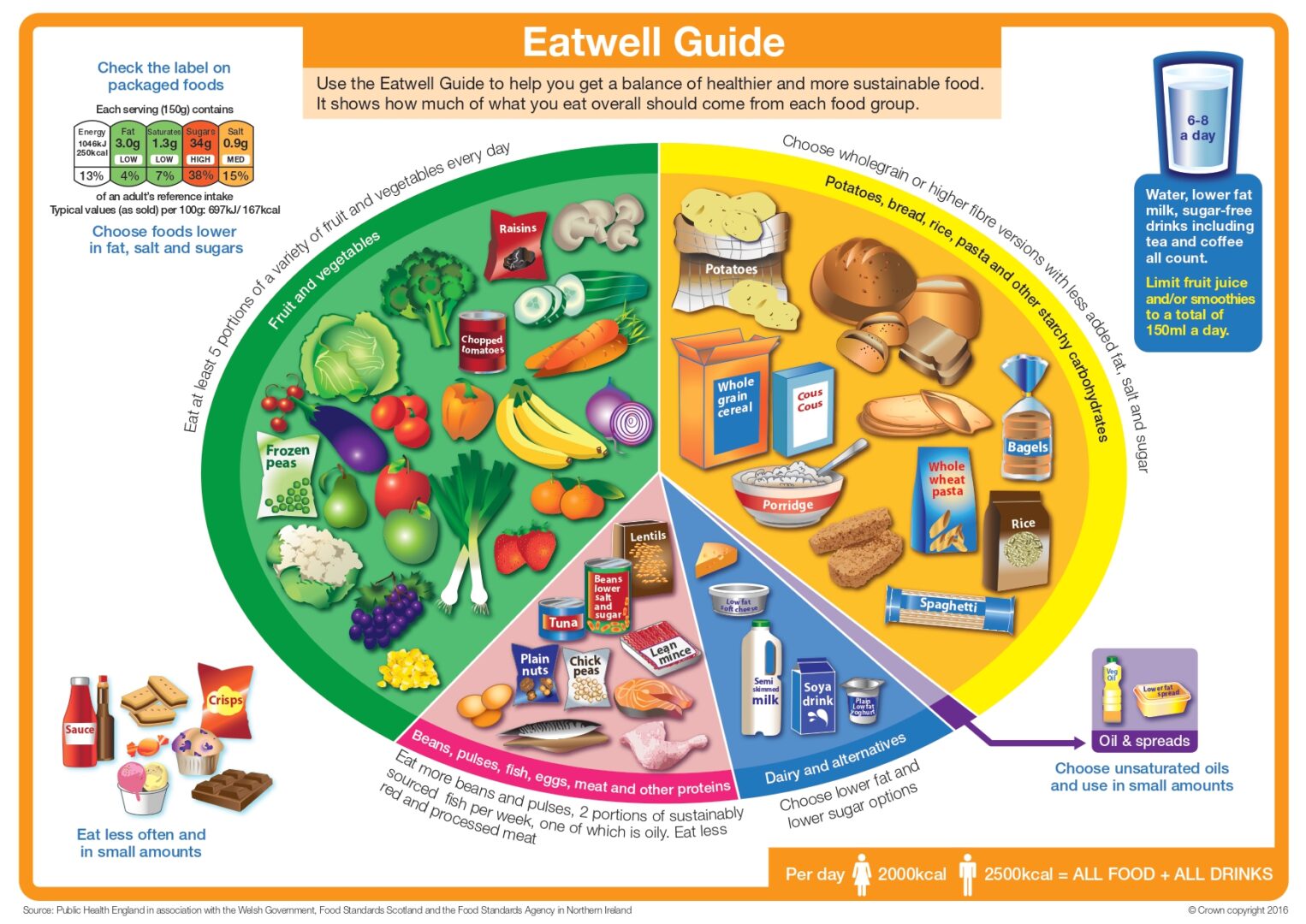
The Eatwell Guide outlines government recommendations for eating a healthy, balanced diet, and it shows how much of each food group you should be consuming. The portions represent your food intake throughout the day or even the week, so you don’t have to replicate the Eatwell guide on your plate at every meal. Instead, think about your nutrition as a whole.
Fruits and vegetables
Aim to eat at least 5 portions of a variety of fruits and vegetables each day, as these provide us with essential vitamins, minerals and fibre. Choose from fresh, frozen, tinned (in juice or water) or dried varieties.
What counts towards your 5-a-day:
- 80g of fresh, frozen or canned fruits and vegetables
- 30g of dried fruit
- 150ml unsweetened fruit or vegetable juice or smoothie – Remember, this will only count towards your 5-a-day once! Try to have whole fruits and vegetables as much as possible.
Starchy carbohydrates
Starchy foods provide us with energy, essential B vitamins and lots of fibre. Base your meals around starchy carbohydrates and go for higher fibre varieties such as wholegrain bread and cereals, wholewheat pasta, brown rice and potatoes with their skins left on.
Protein
Protein is essential for the body to grow and repair itself.
- Meat is a good source of protein, vitamins and minerals, including iron, zinc and B vitamins. Choose lean cuts of meat and skinless poultry whenever possible to reduce your intake of saturated fat. Try to eat less red and processed meats like bacon, ham and sausages.
- Eggs and fish are also good sources of protein and contain many vitamins and minerals. Oily fish is particularly rich in omega-3 fatty acids. Aim to eat at least 2 portions of fish a week, including 1 portion of oily fish. You can choose from fresh, frozen or canned varieties, but remember that canned and smoked fish can often be high in salt, so check the label and choose lower salt options
- Legumes such as chickpeas, lentils, and beans are high in protein and fibre, as well as low in fat, and they also count towards your 5-a-day!
- Nuts are high in fibre, and unsalted varieties make a good snack, but they do contain high levels of fat, so eat them in moderation.
Dairy and dairy alternatives
Dairy foods, such as cheese, yoghurt, and milk, are good sources of protein, and they contain calcium, which helps keep your bones healthy. Go for lower-fat and lower-sugar products where possible. Choose semi-skimmed, 1% fat or skimmed milk, as well as lower-fat hard cheeses or cottage cheese, and lower-fat, lower sugar varieties of yoghurt. Dairy alternatives, such as soya drinks, are also included in this food group. When buying dairy alternatives, remember to choose unsweetened options with added calcium (organic dairy alternatives will not have calcium added).
Oils and spreads
Fats are important in our diet as they help us absorb fat-soluble vitamins A, D, E and K, and they provide us with essential fatty acids. Try to focus on getting most of your fat from unsaturated oils and spreads, such as olive oil, sunflower oil and rapeseed oil or spreads made from these. Swapping from saturated fats, which can be found in coconut oil, palm oil, and butter, to unsaturated fats can help lower cholesterol. Remember that all types of fat are high in energy and should be eaten in small amounts.
The role of the Eatwell Guide in diabetes and prediabetes
For individuals with an increased risk of diabetes or who have type 2 diabetes, the Eatwell Guide serves as a valuable tool for managing blood glucose levels and overall health. Here’s how the Eatwell Guide can help:
- Balanced macronutrients – For individuals with prediabetes or diabetes, balancing carbohydrates, protein and fats is crucial for managing blood glucose levels.
- Choosing complex high fibre carbohydrates, such as wholegrains, fruits, and vegetables, over refined carbohydrates can help prevent spikes in blood sugar.
- Portion control – The Eatwell Guide provides guidance on appropriate portion sizes for different food groups, helping individuals with prediabetes or diabetes to plan balanced meals while keeping their carbohydrate intake in check.
- Emphasis on whole foods – The Eatwell Guide encourages the consumption of whole foods while limiting processed foods. Whole foods are rich in fibre, vitamins, minerals, and antioxidants, which can help regulate blood sugar levels and reduce the risk of complications associated with diabetes.
- Limitation of sugary foods and drinks – The guide advises limiting the consumption of foods and drinks high in added sugars. Excessive sugar intake can lead to spikes in blood sugar levels and contribute to insulin resistance.
Additional benefits of following the Eatwell guide
- Weight management – it can help you maintain a healthy weight or achieve weight loss goals if portion sizes are appropriate for these goals. For more guidance around portion sizes for each food group, check out our ‘Practical guide to portion sizes’ resource!
- Heart health – it can help lower cholesterol levels, reduce inflammation, and lower the risk of heart disease and stroke.
- Improved digestive health – it can promote better digestive health by supporting regular bowel movements and maintaining a healthy gut.
- Nutritional balance – it provides a wide range of essential nutrients, vitamins, and minerals necessary for overall health and wellbeing.
- Improved mood and mental health – it may contribute to improved cognitive function and mood regulation.
The beauty of the Eatwell Guide is that it can be adapted to your own culture and dietary preferences. Check out the Eatwell Guides available in the Wellbeing Way app:
- The Eatwell Guide
- The African & Caribbean Eatwell Guide
- The South Asian Eatwell Guide
- The Vegan Eatwell Guide
- The Vegetarian Eatwell Guide